Carolyn Beauchamp, ACCHt
Inquire Within Florida LLC
Professional Hypnotherapy, Brain Balancing and Workshops
Heal your body and your life with hypnotherapy and brain balancing.

Carolyn Beauchamp is an advanced certified clinical hypnotherapist located in Naples Florida. Carolyn completed her basic and advanced hypnotherapy training at The Wellness Institute based in Issaquah, Washington. She is a member of IMDHA (International Medical And Dental Hypnotherapy Association) and has helped many people with a variety of challenges ranging from smoking cessation, weight loss, fears & phobias and pain control. In addition to hypnotherapy, Carolyn is an Advanced Psych - K Facilitator, utilizing brain balancing techniques for rapid change in a quick, efficient manner in any area a client desires change and resolution.
Carolyn completed workshops in Medical Hypnosis, Somatic Healing & Alchemical Past Life Regression with David Quigley CHt and Michael Ellner, Medical Hypnotist, and Past Life Regression With Soul Screening with IMDHA Hypnotherapist Of The Year 2015 Leslie McIntosh. She completed Basic Psych K Facilitator Training with Myra Lovvorn in W. Palm Beach, FL and completed her Advanced Psych K Facilitation Training with Robin Graham in Raleigh, NC. Carolyn is also a Registered Yoga Instructor specializing in Yin Yoga.
Hypnosis for the Relief and Control of Pain
Hypnosis is a set of techniques designed to enhance concentration, minimize one's usual distractions, and heighten responsiveness to suggestions to alter one's thoughts, feelings, behavior, or physiological state. People differ in the degree to which they respond to hypnosis, which is a natural God-given state in which we go in and out of over 100 times per day. When you are lost in a movie and the character's journey and emotionally involved you are in hypnosis. When you are day-dreaming in a relaxed, focused state of attention you are basically in hypnosis; It is simply a state of awareness in which your brainwave activity has slowed from it's busy, active beta range to a slower, relaxed, focused alpha brainwave state.
Research shows that hypnosis works as part of a treatment program for a number of psychological and medical conditions, with pain relief being one of the most researched areas, as shown in a 2000 study. *
Among the benefits associated with hypnosis is the ability to alter the psychological components of the experience of pain that may then have an effect on even severe pain.
Hypnosis for Weight Loss
Hypnosis works because it works on the level of feelings, patterns, and unconscious motivations. It's much better when we feel we want to eat healthily rather than just think that we should, and when we change the subconscious beliefs that will allow us to do so. Used well, hypnosis will help people naturally desire to make the right choices for their health and well-being. It can also allow one to change underlying beliefs/causes that are subconscious programs from a person's young, formative years of birth to 7 yrs. of age before the critical faculty is developed (after 7 yrs. of age).
Through the use of positive suggestion therapy and other effective hypnotherapy and brain balancing techniques, Carolyn will help you develop a new, positive relationship to food and exercise. The aim of hypnotherapy and brain balancing for weight-loss is to assist you in feeling confident about your body, change negative thoughts and beliefs about eating, and help you lose weight responsibly, while improving your emotional connection to food.
The most frequent clinical uses of hypnosis include: breaking bad habits, overcoming insomnia, smoking, weight loss, recalling forgotten experiences, and as an anesthetic for managing pain.
Medical Hypnosis
Research has shown medical hypnosis to be helpful for acute and chronic pain. In 1996, a panel of the National Institutes of Health found hypnosis to be effective in easing cancer pain. More recent studies have demonstrated its effectiveness for pain related to burns, cancer, and rheumatoid arthritis and reduction of anxiety associated with surgery. An analysis of 18 studies by researchers at Mount Sinai School of Medicine in New York revealed moderate to large pain-relieving effects from hypnosis, supporting the effectiveness of hypnotic techniques for pain management.
Past Life Regression
"Explore Your Past to Empower Your Present". In this informative 2 hour Past Life Regression workshop you will be guided through a progressive hypnotic relaxation exercise to explore a possible past life connection that may reveal clues to your present life situation that help one gain insights & understanding.
(Upcoming Events TBA)
Stop Smoking
As with eating, drinking or any other habit we would like to successfully overcome, smoking is oftentimes an unconscious urge to "push down" feelings that we subconsciously do not want to address. They, like many other habits, are stored in the subconscious mind from childhood, early adolescence or early or later traumas. With both hypnosis and brain balancing, these programs (just like old stored computer programs we no longer need or are served by) can be rapidly and effectively changed and replaced with new, healthy, supportive intentions, goals and beliefs.
*Per psychologists Steven Lynn, PhD, Irving Kirsch, PhD, Arreed Barabasz, PhD, Etzel Cardeña, PhD, and David Patterson, PhD.
Horses To Higher Consciousness - Riding The Cosmic Current is about my journey to hypnotherapy and the transformation that it brought into my life and the lives of others..
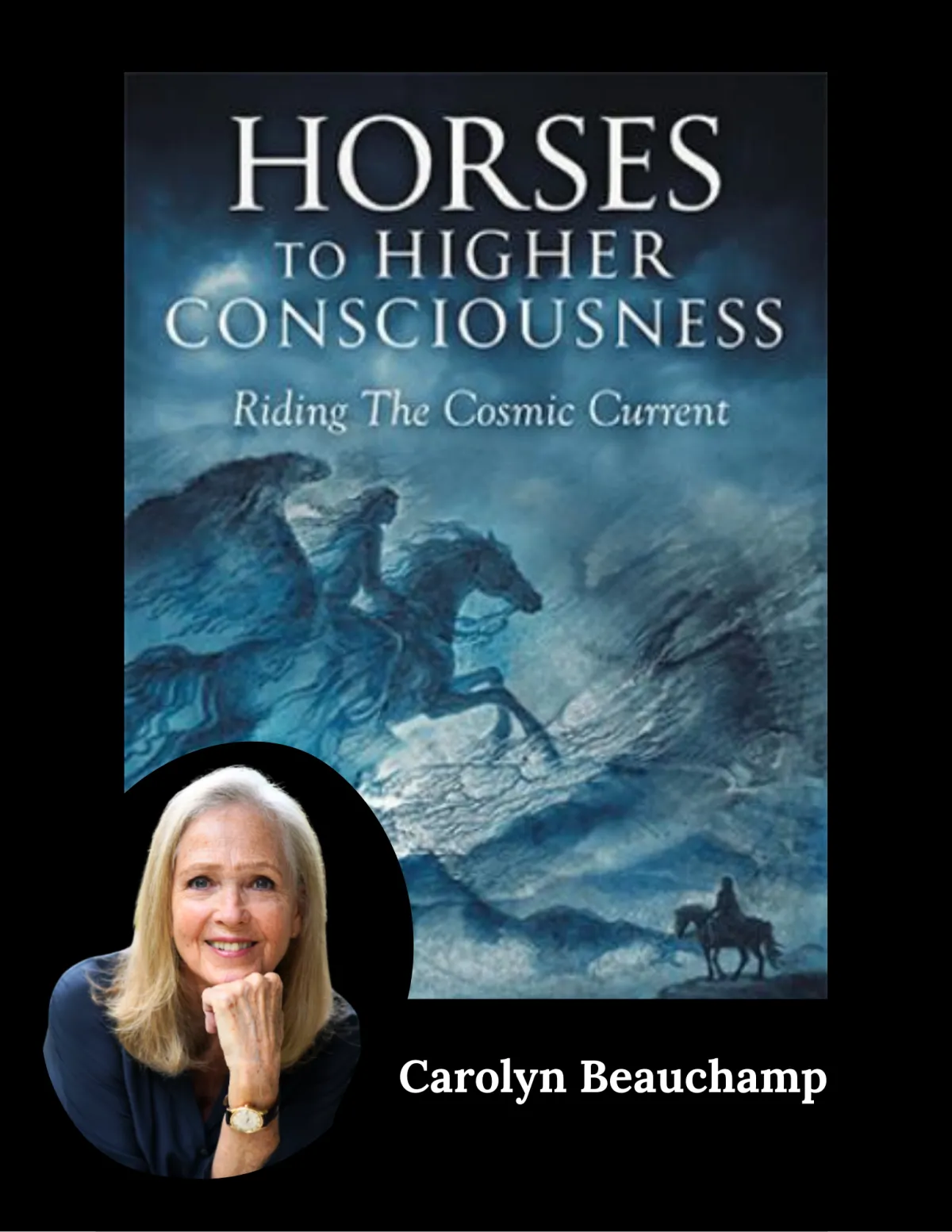
Carolyn Beauchamp is a visionary author and holistic practitioner, dedicated to exploring the profound connection between humans and horses.
In her groundbreaking book, Horses to Higher Consciousness: Riding the Cosmic Current, Carolyn takes readers on a transformative journey, blending ancient wisdom with modern insights. Through vivid storytelling and practical guidance, the book reveals how horses serve as powerful guides to higher states of consciousness, healing, and spiritual awakening.
In Horses to Higher Consciousness, Carolyn shares her own personal experiences and the profound lessons learned from her interactions with these majestic creatures. Whether you’re a horse enthusiast, a spiritual seeker, or someone curious about the deeper connections in life, this book offers inspiration and practical wisdom.
More About Hypnotherapy
The difference between hypnotherapy and hypnosis is while hypnosis is simply an altered state of consciousness hypnotherapy is deliberately induced hypnosis by a professionally trained and qualified hypnotherapist for therapeutic purposes.
Hypnosis is, perhaps, one of the most misunderstood and controversial methods of psychological treatment. The myths and misconceptions that surround hypnotherapy mostly stem from people’s ideas about stage hypnotism. The truth is that stage hypnotism is essentially a theatrical performance and has about as much in common with bona fide clinical hypnosis as many Hollywood movies have with real life.
The fact is that hypnosis is a genuine psychological phenomenon that has valid uses in clinical practice. Simply put, hypnosis is a state of highly focused attention or concentration, often associated with relaxation, and heightened suggestibility. While under hypnosis (i.e., in a hypnotic trance), it seems many people are much more open to helpful suggestions than they usually are.
The positive suggestions that people are given while hypnotized are referred to as “post hypnotic suggestions” because they are intended to take effect after the person emerges from the trance and is no longer under hypnosis.
As explained above, you are not asleep or unconscious while in a hypnotic state. Therefore your conscious mind is awake and aware and able to monitor its surroundings and what is being said to it. If something is "suggested" to you while in a hypnotic state that you do not like or which goes against your moral and spiritual character then one of two things will happen. Your mind will either dismiss the suggestion the hypnotherapist has given you or you will open your eyes and come out of the trance. To put it simply a person has to want what is being suggested to them. The person in a hypnotic trance is always in control, just as someone who is daydreaming can decide to go on or stop at any time. While the practitioner serves as a teacher or guide, the only person who can hypnotize you is you, since trance is a latent potential of your own mind. Therefore, all hypnosis is self-hypnosis.
Hypnosis for the Relief and Control of Pain
Hypnosis is a set of techniques designed to enhance concentration, minimize one's usual distractions, and heighten responsiveness to suggestions to alter one's thoughts, feelings, behavior, or physiological state. Hypnosis is not a type of psychotherapy. It also is not a treatment in and of itself; rather, it is a procedure than can be used to facilitate other types of therapies and treatments. People differ in the degree to which they respond to hypnosis. The key to becoming hypnotized is the extent to which a person is hypnotizable, which is a very reliable and stable individual difference trait that indexes one's openness to hypnotic suggestions.
Research shows that hypnosis works as part of a treatment program for a number of psychological and medical conditions, with pain relief being one of the most researched areas, as shown in a 2000 study by psychologists Steven Lynn, PhD, Irving Kirsch, PhD, Arreed Barabasz, PhD, Etzel Cardeña, PhD, and David Patterson, PhD. Among the benefits associated with hypnosis is the ability to alter the psychological components of the experience of pain that may then have an effect on even severe pain.
Myths About Hypnosis
People often fear that being hypnotized will make them lose control, surrender their will, and result in their being dominated, but a hypnotic state is not the same thing as gullibility or weakness. Many people base their assumptions about hypnotism on stage acts but fail to take into account that stage hypnotists screen their volunteers to select those who are cooperative, with possible exhibitionist tendencies, as well as responsive to hypnosis. Stage acts help create a myth about hypnosis which discourages people from seeking legitimate hypnotherapy.
Another myth about hypnosis is that people lose consciousness and have amnesia. A small percentage of subjects, who go into very deep levels of trance will fit this stereotype and have spontaneous amnesia. The majority of people remember everything that occurs in hypnosis. This is beneficial, because the most of what we want to accomplish in hypnosis may be done in a medium depth trance, where people tend to remember everything.
In hypnosis, the patient is not under the control of the hypnotist. Hypnosis is not something imposed on people, but something they do for themselves. A hypnotist simply serves as a facilitator to guide them.
Past Life Regression Workshops
Explore your past to gain more clarity and empowerment in the present. In this informative workshop you will be guided through a hypnotic progressive relaxation exercise to explore past life recall to discover a possible past of joy, contentment or just plain fun! Participants will learn how the subconscious mind retrieves information from the past that can help you gain greater clarity and understanding in the present.
Carolyn specializes in age regression which is extremely powerful in rapidly uncovering trauma and or stressful situations in early life unrecognized by the conscious mind. Once these memories are retrieved and the emotional "charge" expressed, the old believes attached to these memories are better understood, and new, positive, affirming beliefs are created to replace them. Since these new empowering beliefs are personally created by the client while in the state of hypnosis they have a much more powerful impact. Carolyn completed a past life regression workshop with Dr. Brian Weiss as well as clinical hypnotherapy training including age regression at The Wellness Institute. Carolyn is a member of IMDHA (International Medical and Dental Hypnotherapy Association). She recently was certified in Past Life Regression with soul screening by Leslie McIntosh (IMDHA Hypnotherapist of the year).
The workshops begin with a brief introductory lecture and explanation of the process, followed by relaxing guided imagery with calming music. Participants please a bring yoga mat or something comfortable to sit or lie down on. This will be followed by a short period of voluntary sharing of any insights.
Breathwork Workshops
Breathwork is a highly personal, experiential process that uses breathing techniques to clear out physical, mental and emotional blocks or stresses. The origin of most human behavioral difficulties is in very early childhood experiences. Early in life we learn to suppress our emotions physically by tensing muscles and restricting the breath. Over time, this protective process becomes chronic and automatic and we lose the capacity to experience and express emotions. This repression can sap our vitality and rob us of the ability to experience the positive feelings of love, joy and pleasure.
Breathing is the interaction between our inner selves and the surrounding atmosphere. When we breathe, we absorb, in addition to physical substances, the surrounding reality into our inner system. It is essential, therefore, both for physical and psychological well-being that our breathing is optimal.
Breathwork is both art and science. The art is about surrendering to and trusting your own process. It is about letting go, releasing control and getting the mind out of the way. The science is about techniques that support the surrendering. Breathwork is most effective when both the art and science, the “being” and the “doing” are in balance. For personal growth and development, stress management, spiritual unfoldment, past life recall or as an adjunct to hypnotherapy, breathwork is a useful tool for bringing about permanent, positive life changes.
The workshops begin with a brief introductory lecture and explanation of the process. Participants please a bring yoga mat or something comfortable to sit or lie down on. This will be followed by a short period of voluntary sharing of any insights.